

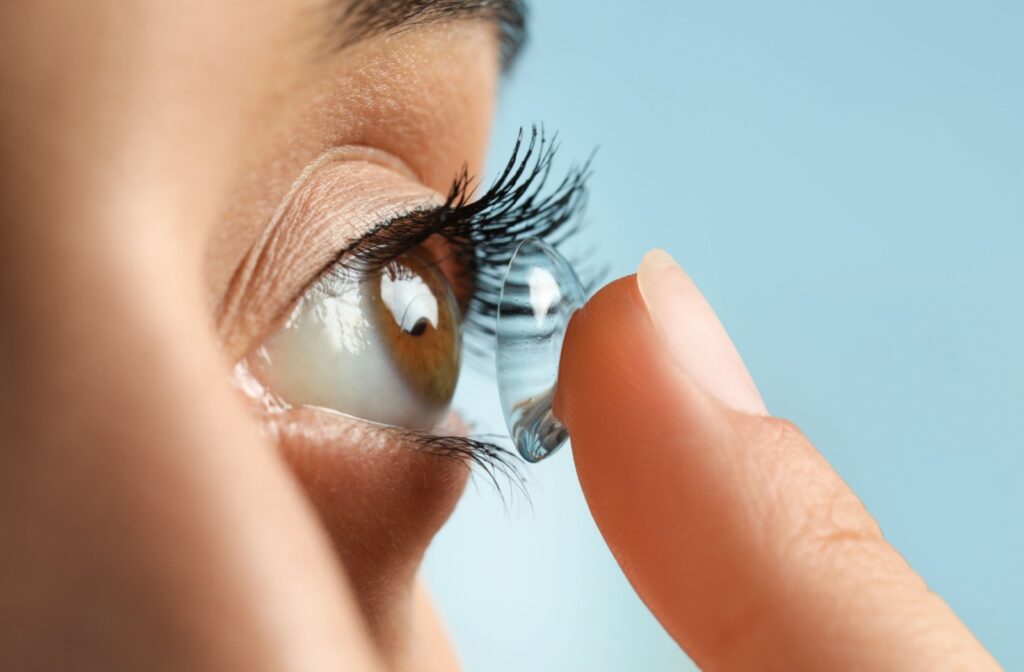
You pull out that spare box of contact lenses from your drawer, only to notice the date stamped on the package passed months ago. Now you’re wondering if those lenses are still safe to use or if you need to toss them out. When it comes to contact lens safety, our team at Advance Eye Care Center wants you to understand the importance of respecting expiration dates.
Yes, contact lenses do expire, and you shouldn’t use them past their expiration date. The date on your contact lens box tells you when the sterile packaging and saline solution can no longer guarantee your eye safety.
Contact Lens Expiration: What You Need to Know
Contact lenses expire because of what surrounds them, not because the lenses themselves change. Each lens sits in a blister pack filled with sterile saline, which helps keep bacteria away. The expiration date tells you when that protective barrier might begin to fail.
Manufacturers seal these packages to create an airtight environment. Over time, the seals can weaken, and the saline solution can lose its effectiveness against harmful microorganisms. Once that date passes, the lenses inside might no longer be safe for your eyes. Following proper contact lens safety guidelines helps protect your vision and prevent complications.
How Long Do Contact Lenses Last?
Most contact lenses stay fresh for 1–4 years from when they’re made, as long as you keep them in their original, unopened packaging. The exact timeframe depends on the brand and type of lens you have.
You’ll find this expiration date printed clearly on the box and sometimes on individual blister packs. This date represents the manufacturer’s timeline for how long everything inside can remain sterile.
Once you open a contact lens package, the original expiration date is no longer important. Your wearing schedule now depends entirely on what type of lenses you have. Because opening the package exposes the lenses to bacteria, it changes when you should throw them away.
Can I Use Contact Lenses That Are Expired?
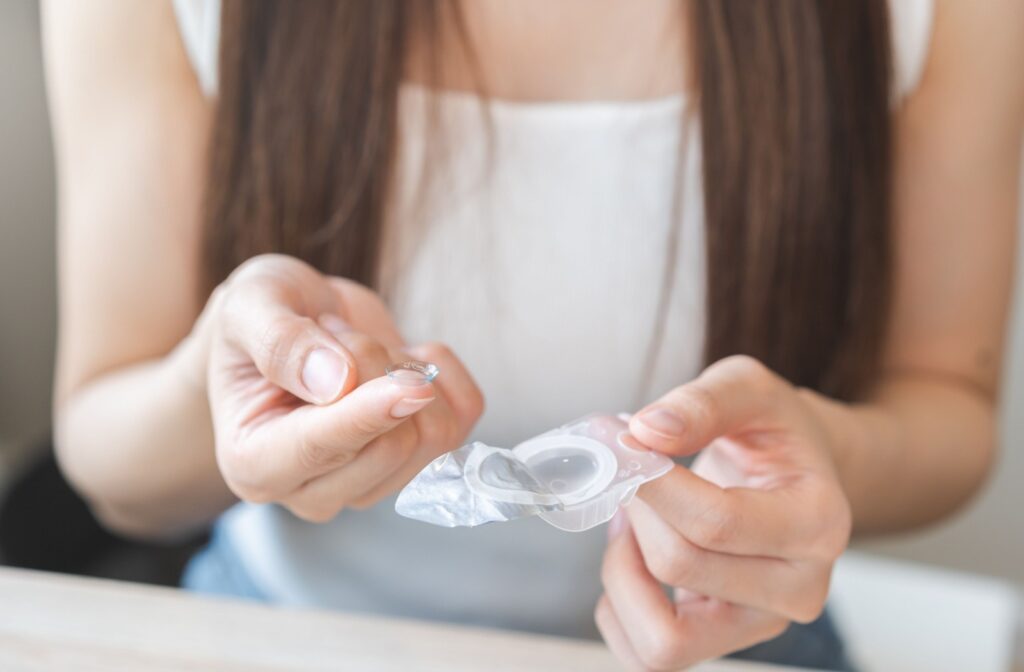
You should never use expired contacts because they pose a serious risk to your eye health. The biggest danger isn’t that the lenses have “gone bad” like old food: It’s that bacteria and other harmful substances may have contaminated them.
When the sterile environment breaks down, your eyes become vulnerable to infections that can cause damage. Some people think they can rinse expired lenses with fresh solution, but this doesn’t remove contamination that has already occurred.
Watch for These Warning Signs
If you notice any of the following after wearing expired contacts, it’s a good idea to contact your eye care team right away:
- Eye pain or unusual discomfort
- Redness that doesn’t go away
- Increased sensitivity to light
- Blurry or cloudy vision
- Discharge from your eyes
- Feeling like something is stuck in your eye
Different Contact Types and Their Lifespans
Different types of lenses offer unique benefits. The material they’re made from affects how long they last and how you need to care for them.
Soft and Daily Disposable Lenses
Soft contact lenses feel comfortable because they’re made from water-absorbing materials. Unfortunately, this also means they soak up bacteria, proteins, and deposits from your tears like tiny sponges, making it very important to follow replacement schedules with soft lenses.
Daily disposable lenses go straight from the package to your eyes to the trash in a single day. You can’t clean them or save them for later, reducing the ability for bacteria or other deposits to build up on the lenses.
Specialty Contact Lenses
Rigid gas-permeable lenses are more durable and can last several years with proper care. They resist buildup better than soft lenses, but you still need to replace your cleaning solutions and storage cases every 3 months to keep them safe.
Keep Your Contact Lenses Safe and Effective
Good storage habits protect both unopened and opened contact lenses. Simple steps can help you avoid eye infections and get the most life out of your lenses.
How to Store Contacts
Before opening your lenses, store boxes in a cool, dry place away from direct sunlight. Heat and humidity can damage the packaging and affect the solution inside. Check expiration dates before opening any package and look for cracks, leaks, or damage in blister packs. If you experience ongoing discomfort with your contacts, our team can recommend specific dry eye treatments and special contact lenses to help.
Schedule a Contact Lens Exam
Even if your old lenses aren’t expired, they might not match your current vision needs, as contact lens prescriptions usually expire in 1–2 years. Regular eye exams with our team at Advance Eye Care Center help make sure your contacts fit properly and your prescription stays current. Schedule your appointment today to keep your vision clear and your eyes healthy.